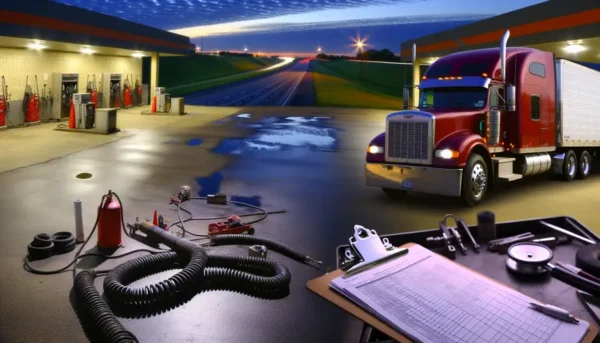
A semi truck brake failure demands quick control, engine braking, safe gear selection, and early use of a runaway truck ramp. Release the accelerator, activate the four-way flashers, and hold a steady line. Do not pump or ride the air brakes. Repeated applications consume stored air, while continuous pressure creates more heat.
If the service brakes still respond, apply them firmly until you slow about 5 mph below your safe speed. Then release them completely and repeat as needed. CDL guidance calls this snub braking. The release period helps the brakes shed heat.
If the brakes stop responding or air pressure keeps falling, commit to the runaway ramp. Do the same if the truck continues to gain speed. Act early. Equipment can be replaced, but an uncontrolled truck can cause irreversible harm.
Immediate Actions During a Brake Failure
These steps apply after you notice weak or lost braking power while moving. Conditions vary, so protect steering control and choose the safest available escape route. Do not risk lives to protect the schedule, cargo, or equipment.
- Hold your lane and look far ahead. Keep both hands on the wheel and avoid sudden steering. Scan for traffic, curves, intersections, uphill areas, emergency turnouts, and runaway truck ramps.
- Release the accelerator and activate the four-way flashers. Cancel cruise control immediately. Use the horn when necessary to warn traffic blocking your escape path.
- Apply the engine brake. Use the strongest setting that available traction allows. Drivers often call an engine brake a Jake brake. Use it carefully on snow, ice, or wet pavement, and follow local noise restrictions.
- Select a lower gear if you can do so safely. Do not coast in neutral or hold the clutch down. Never force a shift that could leave the transmission between gears. A usable gear provides more control than a lower gear you cannot engage.
- Use snub braking if the service brakes still work. Apply firm pressure until speed drops about 5 mph below your safe speed. Release the brakes fully, then repeat when speed increases. Do not fan, pump, or hold light pressure on air brakes.
- Monitor the air gauges and warning devices. Federal standards require the low-air warning to activate at or before 60 psi. Each brake application uses stored air. Spring brakes may begin applying as system pressure falls further.
- Enter a runaway truck ramp without hesitation. Line up early, enter straight, and keep the steering steady. Follow the ramp instead of trying to return to the highway. Do not avoid it because of towing costs or possible damage.
- Choose the safest escape area if no ramp exists. An uphill road or designated emergency area can help reduce speed. Avoid sharp turns, occupied lanes, buildings, pedestrians, and stopped traffic. Use the shoulder only because brake loss creates a true emergency.
- Secure the scene after stopping. Do not continue driving if the brakes appear to recover after cooling. Call emergency services when the truck creates a hazard. Notify the carrier and arrange a professional inspection or tow.
When No Runaway Truck Ramp Is Available
Preserve steering control while searching for a path that keeps people out of the truck’s path. Stay in gear and keep the engine brake working. Use any remaining service-brake capacity in firm snubs rather than one long application.
Look for a designated emergency turnout, uphill road, wide clear area, or naturally rising terrain. Avoid sharp turns that could roll the tractor-trailer. Consider road surface, traffic, grade, and vehicle speed before changing direction.
Do not pull the tractor parking-brake control at highway speed. Spring brakes provide strong holding force, but sudden application may lock wheels or cause a skid. It may also swing the trailer.
Do not grab the trailer hand valve as a substitute for controlled service braking. That action can lock the trailer wheels and start a jackknife. Keep every steering input smooth and deliberate.
If air pressure collapses, the spring brakes may begin applying automatically. Uneven application can make the combination unstable. Use the horn and flashers to warn other drivers, but keep most of your attention on steering.
Stop once you reach a clear emergency area and reduce speed enough to do so safely. Do not move the truck again until a qualified technician inspects the system. Cooling brakes may regain friction without becoming safe.
What Causes Semi Truck Brake Failure
Most brake emergencies provide warning signs, and many start with excess heat. Every brake application on a downgrade converts the truck’s motion into heat at the drums or rotors. Riding the brakes can create heat faster than the assemblies can release it.
As drum brakes heat, the drums expand away from the shoes. The brake system may then need more pushrod travel to apply them. Overheated linings can also lose friction, which drivers commonly call brake fade.
The pedal may feel normal because the air system still sends pressure to the brake chambers. However, the truck may not slow as strongly as it did earlier. That difference can become severe on a long grade.
Extreme heat can glaze linings, damage drums or rotors, weaken parts, and start wheel-end fires. It can also damage seals and nearby tires. Cooling may restore some stopping power, but a technician must inspect badly faded brakes before the truck returns to service.
Low Air Pressure and Air-System Problems
A semi’s service brakes need compressed air at the brake chambers. A failed compressor, major leak, broken hose, damaged gladhand, or faulty valve can prevent proper pressure. Frozen lines, restrictions, and neglected air dryers can cause similar problems.
Moisture can freeze inside lines and valves during cold weather. Drain air tanks as required and maintain the air dryer to control that risk. Follow the vehicle manufacturer’s instructions and the carrier’s maintenance schedule.
The low-air warning must activate at or before 60 psi. Treat the warning as an emergency rather than watching it for several more miles. As pressure falls, the spring brakes may apply without producing a smooth, straight stop.
Do not pump air brakes as someone might pump hydraulic brakes in a passenger vehicle. Each application consumes stored air and can worsen a low-pressure condition. Stop in the safest available place before the system forces the issue.
A repair shop must find and correct the leak or failed component. Simply adding air does not repair the cause. Do not return the truck to service until the system passes the required checks.
Brake Adjustment, Wear, and Contamination
Out-of-adjustment brakes may provide less than their share of the stopping force. Other wheel ends must then work harder and heat faster. Uneven braking can also pull the truck to one side.
Automatic slack adjusters should maintain proper adjustment during normal operation. An adjuster that repeatedly needs manual correction usually signals another mechanical problem. Do not keep adjusting it to hide the defect.
Unless you have the required training, tools, and authorization, leave brake adjustment to a qualified technician. A shop should also handle damaged chambers, worn linkage, seized parts, thin linings, and foundation-brake defects. The same applies to damaged drums or contaminated friction surfaces.
Oil or grease on a friction surface can sharply reduce braking at one wheel end. Fresh metal marks, missing hardware, unusual movement, or audible air leaks can indicate damage. Uneven brake response also deserves immediate attention.
Damaged air lines, poor gladhand connections, faulty valves, or supply problems can disable trailer brakes. Tractor brakes cannot safely compensate for a loaded trailer that provides little or no braking. Stop and correct the defect before continuing.
Early Warning Signs of Brake Trouble
A hot-brake smell provides a clear warning, but do not wait for smoke. Watch for weaker deceleration, pulling to one side, warning lights, unusual noises, or slow air-pressure recovery. A low-air buzzer or light requires an immediate safe response.
Notice how often you need the service brakes on a downgrade. If speed returns quickly after each application, the truck may be moving too fast or using too high a gear. The brakes may also be losing effectiveness.
Continuing at the same speed adds more heat. Slow down while you still have enough braking capacity to do so. Choose a lower gear only when the transmission can accept it safely.
Smoke, a sharp burning odor, or visible heat shimmer calls for a safe stop. Do not touch a drum, rotor, wheel, hub, or tire to test its temperature. Hot wheel-end parts can cause severe burns.
Do not crawl under the truck beside an active roadway. Never throw water on an overheated brake because rapid cooling can crack or distort hot metal. Keep people away from the wheel end.
If you see fire, call emergency services. Use the fire extinguisher only when you have a clear escape route and can act without entering traffic. Never place yourself between a fire and a live lane.
Preventing Brake Failure Before a Mountain Grade
Control a downgrade before the truck crosses the crest. Review the route, weather, construction, steep grades, commercial restrictions, and runaway ramp locations. Check the appropriate state transportation agency for current mountain and chain requirements.
Select a safe gear before starting downhill. Choose one that lets the engine brake control most of the speed without constant service-brake use. The correct gear depends on weight, grade, curves, traffic, traction, transmission, and engine-brake performance.
Start slower than you think the grade requires. The truck can gain speed quickly, while every attempt to reduce it creates brake heat. Leave yourself a margin.
Use the engine brake and apply snub braking when you need the service brakes. Apply firm pressure until speed drops about 5 mph below your safe speed. Release fully and repeat when speed rises again.
Never ride the brakes down a grade. Also check local rules that limit engine-brake use. On slick pavement, reduce speed further and use the engine brake carefully because drive-wheel retarding force can reduce traction.
Brake and Air-System Pre-Trip Checks
A thorough pre-trip cannot prevent every component failure. However, it can catch many defects while the truck remains parked. Follow the CDL manual, carrier policy, and manufacturer’s instructions for each test.
Build air pressure and verify that the system reaches the proper operating range. Test the low-air warning and spring-brake operation as required. Confirm that the warning activates at or before 60 psi.
Listen for air leaks when the engine is quiet enough for you to hear them. Inspect accessible hoses, lines, gladhands, seals, chambers, and slack adjusters. Check drums, rotors, and visible linings for damage, contamination, or excessive wear.
Components should remain secure and properly connected. They should show no obvious leaks, cracks, looseness, or missing hardware. Brake adjustment and wear must stay within applicable limits.
Confirm that the tractor and trailer brakes apply and release correctly. Perform a controlled service-brake test at low speed in a safe area. The combination should stop without severe pulling, unusual delay, or alarming noises.
Do not dispatch the truck if pressure will not build or the warning system fails. The same rule applies when the truck pulls, leaks air, or has damaged brake parts. Follow the carrier’s out-of-service process and request repairs.
Drivers can identify, document, and report defects. Qualified technicians should handle air-brake diagnosis, chamber work, recurring adjustment problems, and friction-material replacement. Drum and rotor repairs also belong in the shop.
What to Do After the Truck Stops
Stopping the truck completes only the first part of the response. Set the parking brakes after the vehicle becomes stationary. Shut down as conditions require and stay clear of moving traffic.
Do not trust the parking brakes alone if the truck rests on a slope or the brakes may not hold. Wait for trained recovery personnel with proper blocking and securement equipment. Avoid standing downhill from the vehicle.
Keep the four-way flashers on. Place three reflective warning triangles according to current regulations and your CDL training when conditions allow. Never enter a live lane to place a warning device.
Wear high-visibility clothing and face traffic when working near the roadside. Use the passenger side when that route provides a safer exit. Leave the highway shoulder as soon as recovery and safety conditions permit.
Call emergency services if the truck blocks traffic, smokes, burns, or creates an immediate hazard. Give responders your exact location, travel direction, vehicle position, and cargo information. Mention any injuries, leaks, fire, or damaged roadway equipment.
Notify the carrier, dispatcher, owner, or safety department. Describe the warning indications and the truck’s response. Tell them if you entered a runaway ramp because recovery will require suitable equipment.
Inspection, Reporting, and Documentation
Do not drive away because the brakes cooled and now appear normal. Excessive heat may damage linings, drums, rotors, seals, tires, and other wheel-end parts. A low-air event also requires diagnosis.
Have a qualified technician inspect both the tractor and trailer brake systems. The inspection should cover wheel ends, chambers, hoses, valves, adjustment, warning devices, and compressor operation. It should also include the governor, air dryer, and tanks.
Ask the shop to inspect tires, hubs, seals, suspension parts, and air lines exposed to heat or ramp damage. A truck that entered a runaway ramp needs proper recovery and a complete condition check. Do not move it under its own power until professionals approve that step.
Record the time, location, grade, weather, load, and approximate air-pressure readings. Note warning lights, buzzers, odors, smoke, brake response, and the actions you took. Stick to facts you observed.
Photograph visible damage and the final vehicle position only when you can do so safely. Preserve dash-camera footage and electronic records through the carrier’s normal process. Complete the required driver vehicle inspection report and incident forms.
Do not guess at a mechanical cause you cannot confirm. Report any inspection, citation, tow, or out-of-service order through the proper channels. Never move the truck until the stated defects and release requirements receive proper attention.
Control the Truck Before Speed Takes Over
Drivers usually prevent brake emergencies at the top of a grade, not halfway down it. A careful pre-trip, conservative starting speed, proper gear, and steady engine braking limit wheel-brake heat. They also preserve service braking for emergencies.
If semi truck brake failure occurs, maintain steering control and release the accelerator. Use the engine brake, remain in a usable gear, and make controlled snub applications only while the service brakes respond. Enter a runaway truck ramp before speed becomes unmanageable.
Do not pump air brakes, coast in neutral, ride the brakes, or continue after the system seems to recover. Secure the truck, report the event, and document what happened. Insist on a qualified inspection of both tractor and trailer before anyone drives the combination again.