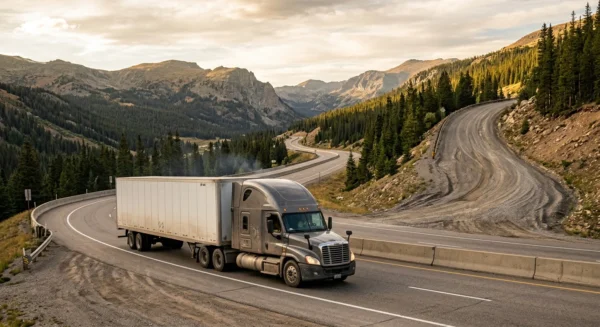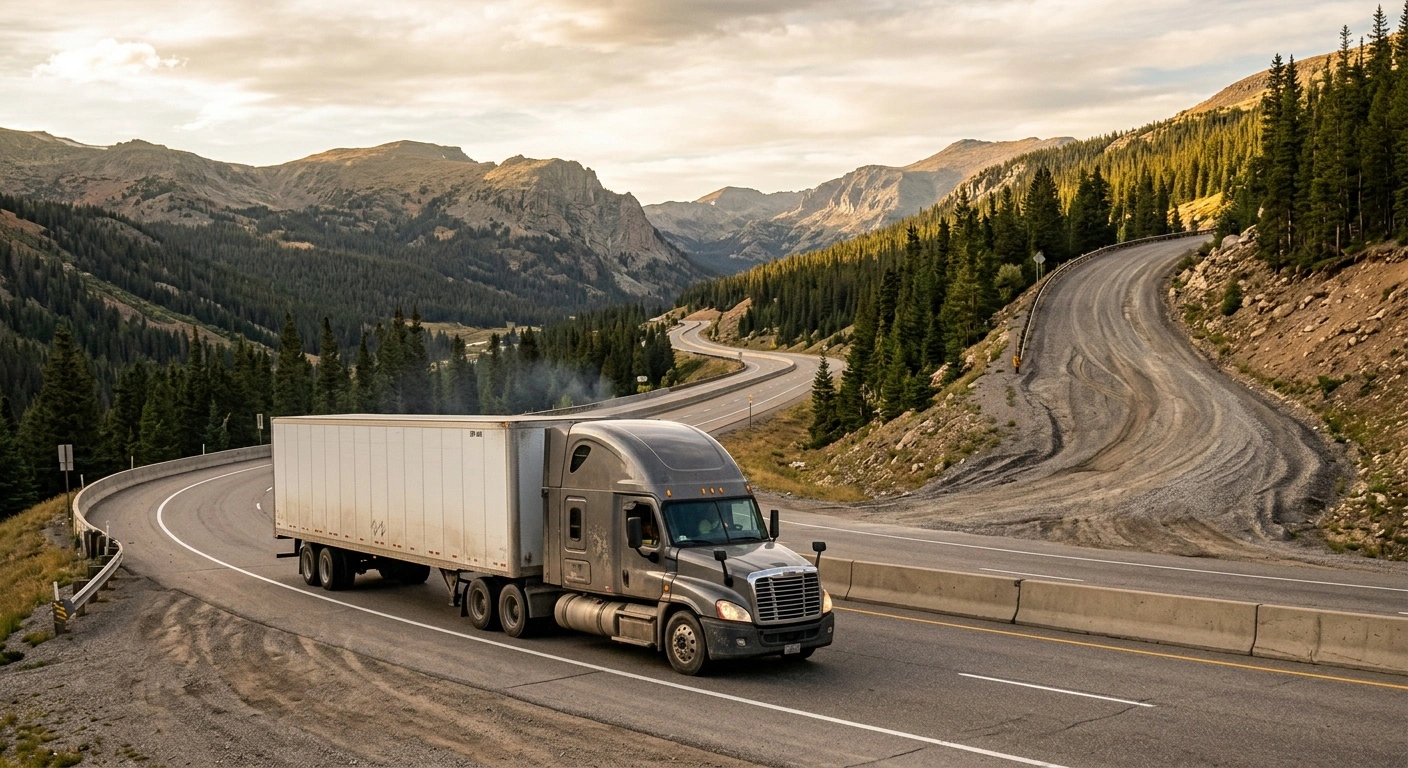
These mountain driving tips for truckers follow one rule: control your speed before gravity controls it. Before a downgrade, slow down and select the proper gear. Then activate the engine brake where permitted. Set a safe speed for the grade, curves, weather, traffic, and load weight.
If the truck gains speed, apply firm snub braking until you drop about 5 mph below your safe speed. Release the brakes completely so they can cool, then repeat as needed. Never ride the service brakes down the grade. Continuous pressure creates heat and can cause brake fade.
Watch your mirrors, gauges, warning lights, and escape routes throughout the descent. If the brakes cannot control the truck, use a runaway truck ramp immediately.
Mountain Driving Tips for Truckers Start Before the Grade
You often win or lose a mountain descent before the steer tires point downhill. Review the route before leaving and note major grades, high passes, safe pullouts, chain areas, and runaway ramps. Do not wait for a roadside warning sign to learn what lies ahead.
Check the state DOT website for construction, closures, weather, chain rules, and commercial vehicle restrictions. Chain requirements vary by state, route, season, and current conditions. Advice from a driver who crossed the pass last year may no longer apply.
Stop at a legal parking location if conditions exceed your equipment, experience, or carrier policy. Make that decision before entering the grade.
Know your cargo and the combination’s total weight. A heavy load pushes harder downhill and takes longer to slow. It also transfers more heat into the service brakes.
Loads with a high center of gravity require lower curve speeds. Posted curve speeds do not account for every truck, trailer, or load.
Build enough time into the trip to avoid rushing across a pass. Weather, chain installation, inspections, and slow traffic can consume your available time. However, delays do not excuse hours-of-service violations.
If your available hours look tight, plan a legal stop. Do not assume you will find truck parking at the summit or bottom.
Inspect the Equipment That Controls Your Speed
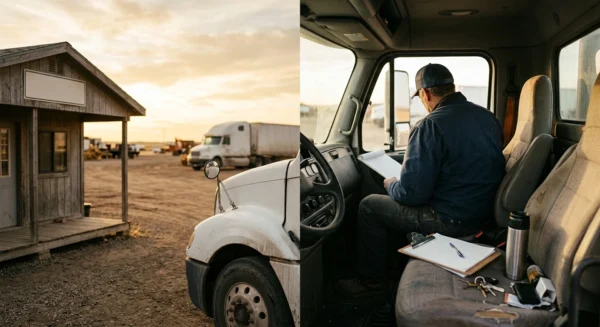
A mountain pre-trip requires more than a quick tire check. Inspect brake components for damage, contamination, missing parts, air leaks, and visible adjustment problems. Stay within the limits of your training and authorization.
Check drums and rotors for cracks or other visible defects. Look for linings that appear dangerously thin, loose, oily, or greasy. Send any serious defect to a qualified shop.
Complete the required air-brake checks for your vehicle. Test pressure buildup, warning devices, leakage, and spring-brake operation. The low-air warning must activate at or before 60 psi.
Spring brakes can begin applying as pressure falls further. Do not drive if a warning device fails or pressure does not build normally. Excessive air loss also requires repair before departure.
Inspect every tire for proper inflation, damage, exposed cord, and adequate tread. Give the steer tires extra attention. Check wheel fasteners for visible looseness and inspect hubs for leaks.
Test the engine brake controls and confirm proper transmission operation. Also check coolant, lights, mirrors, windshield, and wipers. A wet mountain grade is the wrong place to discover failed equipment.
Drivers can identify defects and report them. They may also drain air tanks or replace permitted items under company procedures. Leave brake adjustment, air-system repair, and wheel-end work to qualified technicians.
Never crawl beneath an unsecured truck or trailer.
Choose the Gear Before Going Down
Select a gear that lets the engine and engine brake hold most of the truck’s speed. The service brakes should not require constant pressure. CDL guidance recommends descending in a low gear and avoiding speeds faster than a safe climb.
No single gear works for every descent. The right choice depends on weight, grade, transmission, weather, traction, and equipment.
Choose the gear before the downgrade begins. A manual transmission may end up in neutral if you miss a downshift. An automatic transmission may reject the shift when road speed is too high.
Use manual mode when the transmission and conditions call for it. Follow the vehicle manufacturer’s instructions and your carrier’s procedures.
Activate the engine brake before speed begins to climb. An engine brake slows the drive wheels through the engine. This reduces the heat that the service brakes must absorb.
Check local restrictions on engine-brake use. On slick roads, choose the setting carefully because aggressive engine braking can reduce drive-tire traction.
Start an unfamiliar descent slower than you think necessary. You can adjust if the truck holds speed too easily. Recovering from excessive entry speed may prove impossible.
Traffic behind you does not determine your safe speed.
Control Speed Without Overheating the Brakes
Brake fade occurs when excessive heat reduces braking power. Light, continuous pedal pressure keeps adding heat and gives the brakes little time to cool.
Warning signs may include a burning odor, smoke near a wheel end, or a change in pedal feel. You may also notice a longer stopping response. Needing more pressure for the same result can signal worsening fade.
Use the snub-braking method on long downgrades. Choose a safe speed and allow the truck to reach it. Then apply the service brakes firmly enough to reduce speed by about 5 mph.
Release the brakes completely after slowing. Let the selected gear and engine brake control speed until you need another snub.
This method limits the time that the service brakes generate heat. Do not jab the pedal, lock the wheels, or wait until the truck badly exceeds its safe speed. Brake smoothly while the combination remains straight.
Leave more following distance than you would on level pavement. Traffic may stop beyond a blind curve, and a loaded combination needs room to slow.
If another truck wants to pass, hold a steady line. Use a designated turnout when you can enter and leave it safely.
Do Not Confuse Brake Fade With Low Air
Brake fade mainly results from heat. Low air means the system cannot maintain enough pressure for normal operation. Both problems may occur together, but they produce different warnings.
A low-air light and buzzer signal an emergency. Do not treat them as reminders to inspect the system after the grade.
The low-air warning activates at or before 60 psi. Spring brakes can begin applying as pressure continues to fall. An unexpected spring-brake application while moving can cause a loss of control.
Do not pump air brakes repeatedly. Each application consumes air.
If pressure drops, reduce unnecessary service-brake use. Use the engine brake and proper gear while you seek the safest stopping option. Take a runaway ramp if you cannot maintain a safe speed.
Never shut off the engine while the truck moves. Doing so can reduce steering assistance and prevent the compressor from rebuilding air pressure.
After stopping, secure the vehicle and call for qualified help. Do not continue merely because the pressure rises again. A compressor fault or intermittent leak may return with the next brake application.
What to Do If the Truck Gains Speed
- Look far ahead and hold your lane. Keep both hands on the wheel. Activate the hazard flashers and identify the nearest runaway ramp or safe escape route.
- Come off the throttle. Do not coast in neutral, shut off the engine, or make an abrupt steering movement.
- Use the engine brake. Select an appropriate setting if traction and local rules allow it.
- Attempt a lower gear only when safe. Do not force a shift or risk losing transmission engagement while speed rises.
- Use firm snub braking while the service brakes respond. Reduce speed by about 5 mph, release the brakes, and repeat as needed.
- Monitor both air-pressure gauges. Treat a low-air warning or continuing pressure loss as an immediate emergency.
- Warn nearby traffic. Keep the hazard flashers on and use the horn when necessary. Avoid weaving across lanes while searching for an exit.
- Use the runaway truck ramp if you cannot control speed. Enter straight and stay committed. Equipment damage costs less than a high-speed crash.
- Never apply the parking brakes while moving. A sudden spring-brake application can lock wheels and cause a skid, trailer swing, or jackknife.
- Stay stopped after the emergency. Secure the scene, contact emergency services when needed, and notify the carrier. Arrange a complete inspection before moving the truck.
Handle Curves Before You Enter Them
Reduce speed while the combination remains straight. Hard braking inside a curve transfers weight and can upset the trailer. High or shifting loads increase that risk.
Enter at a speed that allows light power or a stable coast through the turn. Avoid grabbing the brakes halfway around the curve.
Look through the curve toward its exit. Do not stare at the centerline directly in front of the hood. Keep the tractor and trailer inside the lane while accounting for trailer off-tracking.
Off-tracking causes the trailer tires to follow a tighter path than the tractor’s tires. Never cross the centerline to straighten a bend. An approaching vehicle may sit beyond your view.
Posted curve speeds target general traffic. They do not account for every truck’s weight, load height, or road condition. Tankers, livestock trailers, and high flatbed loads often require lower speeds.
Slow down further for rain, snow, ice, darkness, polished pavement, or limited sight distance.
Watch for motorists passing near the end of a climbing lane. Others may move into your following gap before a curve. Hold a predictable speed and path rather than racing them into the merge.
Adjust for Weather and Traction
Snow, Ice, and Chain Conditions
Check weather forecasts and state DOT road reports before a winter mountain trip. Conditions change quickly with altitude. Dry pavement in the valley reveals little about the pass.
Carry the chains required for your route. Practice installing them before you need them beside a snowy highway.
Use designated chain-up areas whenever available. Wear a high-visibility vest, gloves, and suitable weather protection. Install each chain according to its instructions and tighten it correctly.
After moving a short distance, stop in a safe location and recheck the chains. Do not stop on a highway shoulder or ramp to install chains unless an emergency leaves no safer option.
Reduce speed before reaching slick pavement. Make smooth steering, braking, and throttle inputs. Increase following distance and avoid aggressive engine-brake settings on low-traction surfaces.
If the drive wheels slip, ease off the input that caused the traction loss. Use the same approach if the trailer begins moving sideways. A sharp correction may make the skid worse.
Chain laws vary by state, route, season, vehicle configuration, and current conditions. Confirm the rules before departure and check them again as weather changes. Obey road closures and commercial vehicle restrictions.
Rain, Fog, Wind, and Low Visibility
Rain reduces tire grip and can hide standing water in wheel ruts. Slow down early and increase following distance. Avoid cruise control when conditions require frequent speed adjustments.
If the steer tires begin hydroplaning, ease off the throttle. Keep steering movements small and avoid stabbing the brakes.
Fog can thicken quickly in valleys and near mountain summits. Use low-beam headlights and keep the windshield and mirrors clear. Drive slowly enough to stop within the distance you can see.
Do not follow another vehicle’s taillights into conditions you cannot evaluate.
Crosswinds create added risk on ridges, bridges, and canyon openings. Light and empty trailers can move sharply after leaving the shelter of trees or rock cuts. Reduce speed and keep both hands on the wheel.
Expect the wind direction to change around terrain and passing vehicles. Leave extra space beside other large vehicles.
If visibility or traction becomes unsafe, leave the highway at a safe exit. Park in a legal truck parking area. Do not stop on the shoulder or a ramp unless an emergency forces you to do so.
Continue checking official road reports. Conditions on a mountain pass can change within minutes.
Manage Climbs Without Abusing the Truck
Approach a climb with safe momentum, but obey the speed limit. Never charge into a curve to get a run at the hill.
Downshift before the engine begins lugging. Lugging occurs when the engine works hard at an engine speed too low for the load. Follow the manufacturer’s operating range instead of copying another driver’s shift points.
Watch coolant temperature, oil pressure, and engine warnings throughout the climb. If temperatures rise abnormally, reduce engine load and follow the vehicle’s operating procedure.
Never remove a hot cooling-system cap. Stop before overheating causes major engine damage.
Use the right lane and designated climbing lanes. Check the mirrors carefully before every lane change. Faster vehicles may appear suddenly or remain beside the trailer.
Signal early and maintain a predictable path.
Before reaching the summit, ease off the throttle and prepare for the descent. Select the proper gear before speed builds. Confirm that the engine brake works and reassess traffic, weather, and traction.
The summit is where the downhill plan begins.
What to Do After a Brake or Overheating Emergency
Once safely stopped, notify dispatch, the carrier’s safety department, or the owner. Follow company reporting procedures. If the vehicle threatens a travel lane, call emergency services.
Use the required warning equipment only when you can exit safely. Commercial vehicles must carry a fire extinguisher and three reflective warning triangles. However, never walk into live traffic to place a triangle.
Do not touch hot brake components or crawl beneath the equipment. Smoke, odor, discoloration, low pressure, or changed brake response requires a qualified technician’s inspection.
Cooling the brakes does not repair damaged parts. Heat may glaze linings, crack a drum, or damage a wheel-end component. Air leaks also require proper diagnosis and repair.
Document the location, time, weather, road conditions, and warning indications. Record any gauge readings you remember and describe how the truck responded. Note when you reported the defect and who received the report.
Take photographs only from a safe location away from traffic.
Complete the required driver vehicle inspection reports accurately. Never minimize a brake problem to keep the load moving. Do not operate a vehicle under an out-of-service order.
After using a runaway ramp, follow instructions from law enforcement and the road authority. Coordinate with the carrier and recovery service before anyone attempts to move the truck.
Make Every Mountain Descent Uneventful
The safest descent produces no smoke, alarms, or white-knuckle stories. Inspect the truck, study the route, and choose the gear before the downgrade. Let the engine brake handle as much work as traction and local rules allow.
Use firm snub braking instead of riding the service brakes. Look well ahead for curves, stopped traffic, changing weather, and runaway ramps.
These mountain driving tips for truckers work only when drivers apply them before trouble starts. Leave enough room to travel slower than surrounding traffic. Never let another driver choose your descent speed.
Your safe speed depends on the truck, load, grade, visibility, and available traction. Experience helps, but mountain roads never reward shortcuts.
Check state DOT information before every trip for chain laws, closures, and commercial vehicle restrictions. Follow current CDL guidance, carrier procedures, and manufacturer instructions. Send the truck to a qualified shop whenever brakes, tires, air systems, or cooling systems fail inspection.