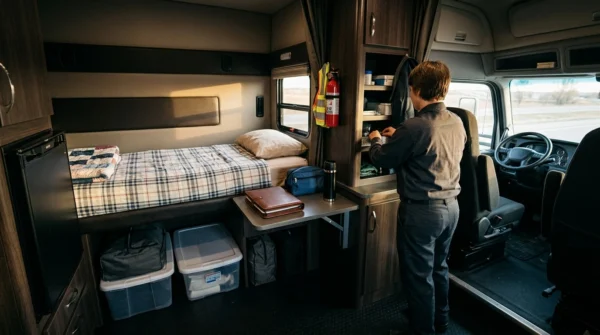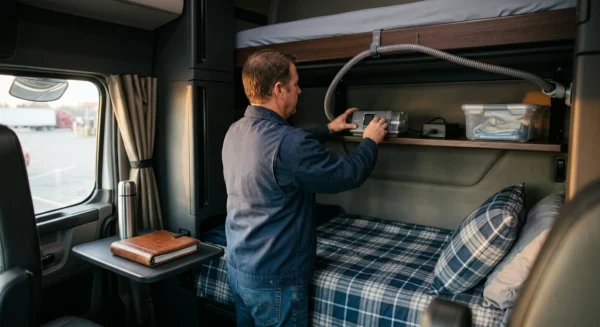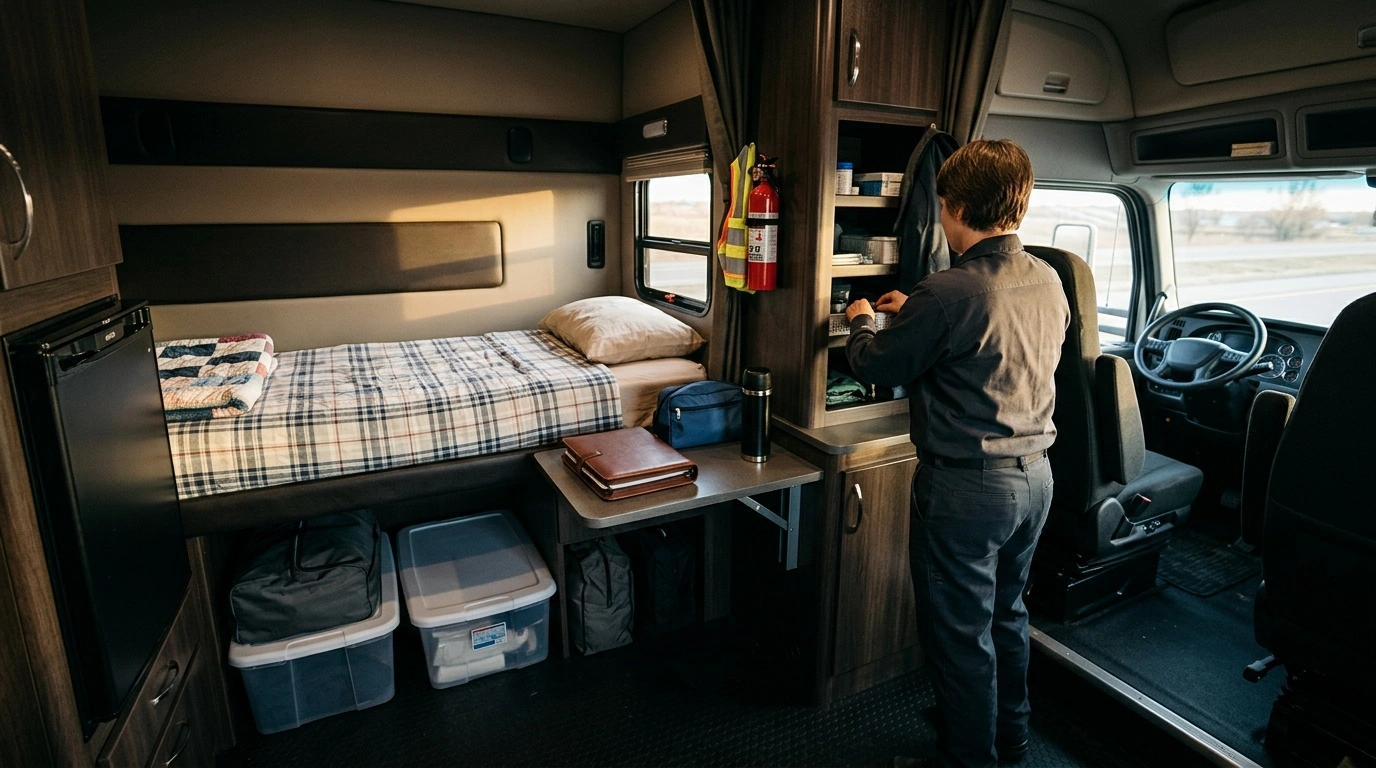
The best semi truck storage hacks keep daily gear within reach and dirty equipment away from clean bedding. They also stop loose objects from becoming dangerous during hard braking. Start by dividing the rig into work, food, sleep, clothing, and emergency zones.
Your truck does not need to resemble a furniture catalog. However, you should find gloves, paperwork, medicine, or a clean shirt without emptying the sleeper. Nothing should roll under the pedals, block an exit, cover a vent, or interfere with safety equipment.
Choose containers that fit the truck and secure them before driving. Give every item one regular home. A system that takes only a few minutes to reset has a better chance of surviving daily trucking.
Best Semi Truck Storage Hacks by Use Case
No single organizer works everywhere in a rig. Soft bags fit odd-shaped compartments, while rigid bins protect food, electronics, and paperwork. Clear containers show their contents, but opaque containers reduce visual clutter and block light.
Drawers provide quick access, although you must secure them before driving. Before buying an organizer, measure the compartment opening and the space behind it. A bin may fit under the bunk but still catch on a hinge, lip, or mattress frame.
Avoid weak adhesive mounts and suction cups for heavy objects. Cab heat, cold, and vibration can loosen them. In most trucks, a mix of storage types works better than one system used everywhere.
| Storage type | Best use | Advantages | Drawbacks |
|---|---|---|---|
| Clear latching bins | Food, spare supplies, cleaning products, and seasonal gear | Show their contents, stack neatly, and protect against minor spills | Waste space in curved compartments; lids and latches can break |
| Soft zippered bags | Clothing, bedding, shower gear, and laundry | Fit tight spaces and are easy to carry into a truck stop | Provide little crush protection and can become shapeless junk bags |
| Small drawer units | Socks, charging cables, office supplies, and personal-care items | Allow fast access without removing stacked containers | Can rattle, and the drawers require restraints |
| Seat-back organizers | Maps, gloves, wipes, flashlights, and light paperwork | Use vertical space and keep small items visible | Can restrict seat movement or become overloaded |
| Compression bags | Spare bedding and off-season clothing | Reduce the size of bulky soft goods and keep them clean | Take time to reopen, and some bags slowly lose their seal |
| Document case or expanding file | Registration, permits, receipts, and maintenance records | Keeps paperwork sorted and protected | Requires regular cleanup to prevent paper buildup |
Strip the Sleeper Before Organizing It
Organizing unnecessary belongings only creates neat stacks of unnecessary belongings. Park legally in a safe location and shut down the truck as appropriate. Remove everything that does not stay permanently mounted.
Sort the contents into four groups: keep in the cab, store at home, discard, or return. Look closely at duplicate tools, expired food, old paperwork, empty containers, and worn clothing. If you never use something, stop giving it valuable space.
Next, clean the empty compartments. This step makes leaks, damaged latches, loose fasteners, and pest activity easier to spot. Check the bunk frame and storage doors before loading them again.
Keep heavy items low and near the truck’s center. This placement reduces falling hazards and makes containers easier to lift. It also limits awkward twisting when you pull gear from storage.
Reserve prime spaces near the driver’s seat, bunk edge, and main cabinet for daily items. Store monthly-use gear deeper under the bunk or in a suitable exterior compartment. Leave some open space for groceries and supplies added during the run.
Build Storage Zones That Match the Job
A zone system removes the daily decision about where each item belongs. Keep work gear together, food together, and clean clothing away from greasy gloves. Choose locations based on where and when you use each item.
Items used from the driver’s seat belong in the cab zone. Still, only reach for them while safely parked. Store breakdown gear where you can retrieve it without unloading the sleeper.
Keep sleep gear near the bunk and pack shower supplies in a portable bag. Broad labels such as “electrical,” “winter gear,” and “cleaning” make sorting easier. Review the zones after a week and move items that repeatedly land elsewhere.
Driver’s Area
Keep the driver’s area nearly bare because clutter creates the greatest risk there. Do not leave objects loose on the floor, dashboard, seat, or doghouse. During emergency braking, they can reach the pedals or strike someone.
Secure navigation equipment where it cannot block your view. Set up navigation, radio, and podcasts before moving. FMCSA rules prohibit texting and holding a mobile phone while operating a commercial motor vehicle.
Use one secured compartment for sunglasses, a flashlight, pens, and fuel cards. Place current trip documents in a separate holder. Do not mix them with old bills of lading or meal receipts.
Add a small, lined trash container to control wrappers and paper towels. Secure it so it stays upright. Keep drinks in proper cup holders rather than loose on the bunk or passenger seat.
Sleeper and Bunk Area
Treat the bunk as a bed rather than the truck’s largest shelf. Clear it before driving so tools, appliances, and bags cannot launch forward. Store daily clothes in a drawer, hanging organizer, or soft packing cubes.
Separate clean clothes from dirty laundry. Use simple bedding that you can remake quickly instead of piling blankets in a corner. Keep a clear path between the bunk and cab for nighttime movement.
Under-bunk space works well for heavy supplies, spare bedding, and less-used gear. However, storage must not block truck equipment. Keep HVAC vents, electrical panels, emergency exits, and service access points clear.
Secure drawers and cabinet doors with factory latches or suitable restraints. Do not attach restraints near controls or wiring. Check them regularly for wear, looseness, and damage.
Exterior Compartments
Exterior boxes suit dirty, wet, or mechanical equipment that should stay outside the sleeper. Separate gloves, rain gear, wheel chocks, and driver-approved tools with trays or bags. Carry spare fluids only when the carrier permits them.
Stand liquids upright inside a leak-resistant container. Never transfer a chemical into an unmarked food or drink bottle. Follow label directions because heat can make some chemicals and pressurized containers unsafe.
Inspect door seals and compartment drains for leaks. Place heavy tools low and restrain them so they cannot damage the box. Check the compartment inventory during pre-trip inspections, especially before winter travel or mountain routes.
Leave repairs to a qualified shop unless you have the proper training and authorization. This includes work on brakes, wiring, mounted equipment, and other truck systems. Storage access should never encourage an unsafe roadside repair.
Use the Space You Already Have
Good semi truck storage hacks use vertical space before adding more containers to the floor. Seat-back pockets, door organizers, and hanging fabric shelves can hold light items. They preserve walking room when installed correctly.
Do not overload doors, sun visors, curtain tracks, or trim pieces. Those parts rarely support much weight. Added storage must not obstruct airbags, mirrors, windows, vents, handles, or seat travel.
- Under the bunk: Use low, latching bins for bulk supplies. Restrain heavy containers so they cannot shift.
- Inside cabinets: Group small items in shallow trays. This keeps them from disappearing behind larger packages.
- On cabinet doors: Store light goods such as washcloths, packets, or empty bags. Confirm that the door still latches.
- Behind the passenger seat: Secure shower supplies or rain gear without restricting the seat or exit.
- Beside the bunk: Keep a small nighttime caddy for glasses, medicine, a flashlight, and charging cables.
- In deep compartments: Use several removable bins instead of one container that requires complete unloading.
Non-slip shelf liner can reduce drawer noise, but it cannot replace a latch or tie-down. Reusable straps work for light, soft goods when they do not cross walkways. Avoid creating loops or snag points.
Magnets may hold very light objects on suitable metal surfaces. Test the location and keep magnets away from equipment they could affect. Before driving, confirm that every added item will remain secure during hard braking.
Keep Food From Taking Over the Cab
Groceries often come in packaging designed for a house rather than a sleeper. Remove unnecessary packaging after saving cooking directions, ingredient information, and expiration dates. Transfer food into clean containers designed for food storage.
Keep dry goods in sealed bins to control crumbs, odors, moisture, and pests. Separate all food from tools, dirty gear, cleaning chemicals, and fuel additives. Clean spills before they spread into bedding, paperwork, or electrical accessories.
Use older food first and inspect the refrigerator regularly. Leave enough room for air to circulate, and follow the appliance manufacturer’s instructions. Discard food that has remained at an unsafe temperature.
Build a One-Week Food System
Give snacks, meal ingredients, drinks, and utensils separate homes. A shallow snack bin keeps bars, nuts, and crackers visible. Carry one compact set of dishes instead of stocking the sleeper for a group.
Store sharp utensils in a closed drawer or hard case. They should not shift or cut through a soft bag. Secure cookware and appliances before moving the truck.
Build your grocery list around the available storage space. Portion food only with clean hands and containers, then refrigerate it promptly. Check the food inventory after each run to reduce waste and expired supplies.
Control Clothing, Laundry, and Shower Gear
Pack enough clothing for the run and a reasonable delay. Leave extra shirts and rarely used items at home. Packing cubes or soft bags work well for separating work clothes, socks, and cold-weather layers.
Rolling clothes improves visibility, while folding works better in some shallow drawers. Pack complete work outfits together when possible. This saves time during early starts in a dark cab.
Place worn clothes in a breathable laundry bag. Keep wet towels separate until they dry because sealed damp fabric quickly develops odor and mildew. Store the laundry bag away from food and clean bedding.
Prepare a portable shower bag with sandals, toiletries, a towel, and clean clothes. Restock it after each use. Follow medicine labels and protect medications from temperature extremes.
Road conditions can make proper medicine storage difficult. Ask a doctor or pharmacist for guidance when heat, freezing temperatures, or refrigeration creates a problem. Do not leave temperature-sensitive medicine in an unsuitable exterior compartment.
Organize Paperwork Without the Avalanche
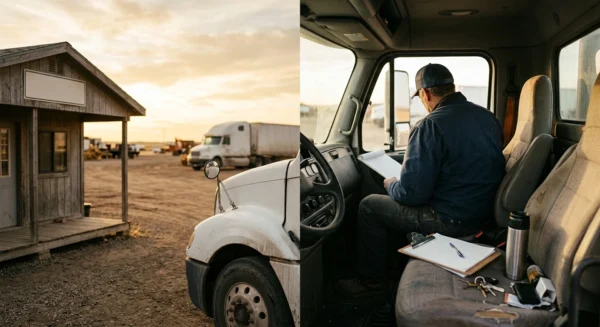
Paper can overwhelm a truck because each trip adds more documents. Use one protected holder for records needed during a stop or inspection. Keep trip-specific paperwork in a second holder.
Maintain current registration, insurance documents, permits, and medical certification information as applicable. Place them where you can reach them while parked. Do not leave sensitive documents visible when the truck stands unattended.
Separate fuel, toll, scale, repair, and meal receipts according to your company’s system. Scan or photograph receipts only while parked. Confirm that each image remains readable before discarding any permitted original.
Choose one regular day to submit documents and remove completed paperwork. Owner-operators should separate business records from personal records. Confirm tax and recordkeeping requirements with the IRS and a tax professional familiar with trucking.
Keep Safety Equipment Accessible
Required emergency equipment must remain complete, serviceable, and easy to reach. Commercial trucks generally carry a secured fire extinguisher and required warning devices. Many trucks use a set of three reflective warning triangles to satisfy the warning-device requirement.
Mount the extinguisher correctly and inspect it as required. Keep the warning devices together in their case. Laundry, bottled water, and storage bins must not block either item.
Do not stop on a highway shoulder or ramp for routine reorganizing. Plan ahead and use legal parking for access to exterior compartments. During an emergency, retrieve equipment from the safest available position.
Keep doors, sleeper exits, steps, and grab handles clear. Maintain three points of contact when entering or leaving the truck. Never hang bags from steering controls, brake controls, or operational handles.
Secure portable appliances before driving and unplug them according to their instructions. Keep extension cords away from pinch points and walkways. Do not overload outlets or inverters.
Stop using electrical equipment that produces heat, odors, discoloration, or repeated faults. Ask a qualified shop to inspect damaged outlets, wiring, batteries, or inverters. Extra storage never justifies an electrical or fire hazard.
Use a Short Reset Routine
An organized truck stays that way through small resets. While safely parked, remove trash, return items to their zones, and clear the floor. A few minutes each day prevents a long cleanup later.
At the end of the driving day, prepare the next day’s clothes, documents, water, and weather gear. This routine reduces morning searches. It also protects time needed for your pre-trip inspection and rest.
- Remove trash and spoiled food.
- Clear the floor, seats, dashboard, bunk, steps, and exits.
- Return work gear, food, clothing, and paperwork to their assigned zones.
- Latch drawers, cabinets, refrigerators, and storage compartments.
- Secure appliances, drink containers, tools, and other heavy objects.
- Confirm that the fire extinguisher and warning devices remain accessible.
- Restock the shower bag, paper supplies, water, and basic food.
- Check for leaks, damaged containers, loose mounts, and electrical problems.
Once a week, remove items that no longer deserve space. Replenish only the supplies you use. At the end of each run, take home laundry, old paperwork, excess groceries, and unneeded seasonal gear.
An item that keeps landing on the bunk or floor probably has an inconvenient home. Its assigned compartment may also be too full. Adjust the system instead of repeating the same cleanup.
A Safer, Easier Rig to Live In
The goal is a truck where important gear stays secure and remains easy to find. Start with safety hazards, then organize the cab, bunk, food, clothing, paperwork, and exterior equipment. Measure before buying containers and keep heavy objects low.
The most useful semi truck storage hacks still work when you feel tired or rushed. Use sturdy containers, clear zones, and a short daily reset. Avoid complicated systems that require constant sorting.
Keep exits open, pedals clear, emergency equipment accessible, and loose objects restrained. Check the setup after grocery runs and before moving the truck. A practical storage system makes the rig safer, cleaner, and easier to live in.