The best truck parking tips begin with one firm rule: plan your stop before your fuel, clock, and alertness run low. Choose a primary location and at least two legal backups. Then check availability well before you need a space.
Do not leave truck parking for the final minutes of your driving day. Lots near major freight corridors and large cities often fill by late afternoon. A travel center that looks empty at lunch may have no open spaces by dinner.
Use established truck stops, approved rest areas, carrier terminals, and customer facilities that grant permission. Never plan to park on a highway shoulder or ramp except during a genuine emergency. Choose a location where you can rest without risking a collision, citation, tow, or police visit.
Practical truck parking tips before you roll
Add parking to your trip plan alongside fuel, weather, construction, and appointments. Check where your available driving time will place you. Also review overnight restrictions and the number of legal alternatives nearby.
A useful primary stop should fit your route and accommodate your combination. It should also leave enough driving time to reach a backup. For example, your first alternate might be a rest area before the stop, while another travel center lies farther ahead.
Do not place every backup farther down the road. Keep one option behind you or along a nearby legal route. A crash, closure, customer delay, or full lot may prevent forward progress.
Call the shipper or receiver if its overnight parking policy remains unclear. Ask about staging areas, gate hours, restroom access, and security rules. Record the name or department that granted permission in case security questions you later.
Plan parking around your hours of service
Most property-carrying drivers may drive for 11 hours after taking 10 consecutive hours off duty. They must complete that driving within a 14-hour window. FMCSA rules also limit driving to 60 hours in seven days or 70 hours in eight days.
The 30-minute break rule applies after eight cumulative driving hours without a qualifying 30-minute interruption. A driver may use qualifying off-duty, sleeper-berth, or on-duty not-driving time for that interruption. FMCSA also allows a 34-hour restart when drivers meet the applicable requirements.
Qualifying sleeper-berth splits may divide required rest into 7/3 or 8/2 periods. Those options affect your available hours, but they cannot create an open parking space. Confirm current rules with FMCSA and your carrier’s safety department.
Start each day with an estimated shutdown area. Rework that estimate after major delays. If loading takes three extra hours, discard the parking plan based on an on-time departure.
Preserve enough legal driving time to reach a backup without rushing. Traffic, weather, fuel lines, and crowded gates can consume your remaining time quickly. New drivers often underestimate those delays.
Never falsify a log, alter an ELD, or exceed your hours to chase parking. Contact dispatch or your safety department if an unexpected event leaves you without a safe option. Record the situation accurately and follow lawful instructions.
Choose the right type of truck parking
A legal-looking patch of pavement may still prohibit commercial vehicles. Even a legal space may not support a safe ten-hour break. Consider your clock, trailer, cargo, appointment, weather, and need for facilities.
| Parking option | Best use | What to verify | Main drawback |
|---|---|---|---|
| Truck stop or travel center | Fuel, food, showers, and a full break | Parking rules, reserved sections, entrance layout, and local idling limits | Lots can fill early and may contain tight rows or heavy foot traffic |
| Public rest area | Short breaks or overnight rest where signs permit it | Commercial parking signs, time limits, and closure notices | Services and parking capacity may be limited |
| Carrier terminal | Company drivers and approved contractors | Gate access, overnight permission, and available facilities | The terminal may sit off route or restrict access |
| Shipper or receiver | Staging before an appointment | Direct permission, approved areas, check-in times, and gate rules | The customer may prohibit parking even when the property looks empty |
| Paid or reserved lot | Predictable parking near a busy freight market | Reservation terms, arrival windows, security, and space dimensions | Payment does not guarantee easy access or a quiet night |
A marked truck space at an established facility usually beats an improvised spot behind a closed business. Private property can lead to towing. Local restrictions may also apply when signs appear unclear.
Do not assume that a row of parked trucks proves permission. It may only show that several drivers made the same risky choice. Verify the rules before shutting down.
Check your trailer swing, overall length, and turning path before entering a lot. Drivers hauling doubles or oversize loads need extra room. Narrow lanes and dead-end rows also create problems for reefers that need fuel access.
Use parking apps and calls without driving distracted
Parking apps, navigation tools, state systems, and driver reports can narrow your search. However, they cannot track every truck entering or leaving a property. Treat availability reports as estimates rather than guarantees.
Recent driver updates carry more value than old comments, but conditions can change within minutes. Satellite views can reveal entrances, one-way lanes, fuel islands, and nearby roads. They can also show whether a lot has room to turn around.
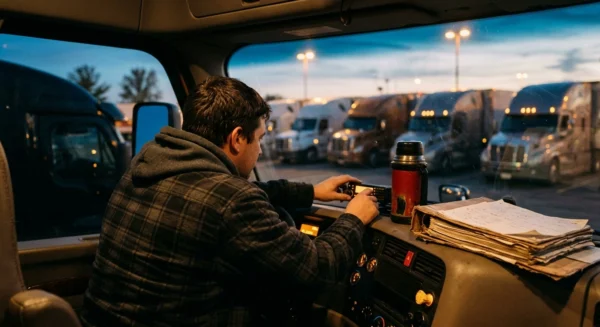
Set your navigation, parking apps, radio, and audio before moving. FMCSA rules prohibit commercial drivers from texting or holding a mobile phone while driving. Never scroll through parking reviews at highway speed.
Pull into a safe, legal location when you need more information. A co-driver can handle the search while you drive. Voice controls reduce phone handling, but complex searches still divert attention from traffic.
A direct call can uncover construction, closures, overflow areas, or open reserved spaces. Ask specifically about tractor-trailer parking. Otherwise, an employee may describe the passenger vehicle lot.
Enter crowded truck stops slowly
Reduce speed before turning onto the property. Watch for trucks queued along the access road. Crowded lots combine tired drivers, pedestrians, passenger cars, delivery vehicles, and tractors backing from both sides.
Use a low speed and turn on your lights when conditions require them. Keep your foot ready for the brake without riding it. Never race another driver for a space.
Scan each row before you commit. Look for crooked trailers, dropped equipment, open doors, pedestrians, barriers, trash containers, and objects near the pavement. Check for tractors that extend into the travel lane.
Make sure you can set up without trapping the truck or striking nearby equipment. A tight blind-side back may create more risk than the space is worth. Use a safer space or another facility when possible.
Use GOAL, which means Get Out And Look. Set the brakes, secure the truck, and wear high-visibility clothing. Inspect both sides, the rear boundary, overhead clearance, and the tractor’s swing path.
Back slowly and stop whenever you lose sight of an obstacle. Turn off distracting audio and open the windows when practical. Do not let waiting drivers rush your setup.
If a spotter offers help, agree on clear hand signals first. Stop immediately if you lose sight of that person. The driver remains responsible for the truck’s movement.
What to do when the lot is full
A full lot does not permit you to block a fire lane, fuel island, or access road. It also does not make a highway ramp safe. Leave enough time to use the backups you chose earlier.
Before moving, confirm that your legal hours and road conditions allow you to reach the alternate. Contact dispatch or your safety department if they do not. Early communication provides more options.
Use this sequence instead of circling until fatigue takes over:
- Check the legal parking area once. Follow marked traffic flow and look for spaces hidden from the entrance. Avoid repeated laps through a congested lot.
- Ask about reserved or overflow parking. Staff may direct you to an approved area that signs do not clearly show.
- Call the nearest legal backup. Confirm that it accepts commercial vehicles and ask about closures or access limits.
- Update navigation while stopped. Review the route, low clearances, weather, and remaining driving time before leaving.
- Notify dispatch early. Parking trouble can affect appointments, fuel plans, and delivery schedules.
- Stop improvising if fatigue makes driving unsafe. Leave the traveled roadway at the first safe, legal opportunity. Then follow company and emergency procedures.
Do not create a space along a curb when doing so blocks emergency access or truck movement. Leave room around dumpsters, buildings, loading areas, and shop doors. Long-wheelbase tractors need wide turning paths.
Never park on a highway shoulder or entrance or exit ramp except during an emergency. These locations expose drivers to high-speed traffic and limited escape routes. A line of parked trucks does not remove that danger.
Use reserved parking for demanding routes
Reserved parking can help when a route ends near a large city or a busy freight corridor. It also helps with evening appointments. View the fee as payment for predictability, not unlimited arrival access.
Read the facility’s terms before relying on a reservation. Check the arrival window, cancellation policy, check-in process, and enforcement procedure. Find out whom to contact if another truck occupies the reserved area.
A paid space may still require a difficult back. It may also sit beside idling trucks or active traffic. Review the lot layout and keep a legal backup.
Company drivers should check reimbursement rules and receipt requirements. Owner-operators should compare the fee with extra fuel, lost time, missed appointments, and off-route miles. A modest parking charge may cost less than searching several lots.
Do not drive unsafely because you paid for a space. Change the plan if traffic, weather, or fatigue makes the location unreachable. Notify the facility when practical.
Park so you can leave safely
Choose a legal pull-through space when the lot and your combination allow it. This choice can simplify departure after nearby spaces fill. If you back in, center the trailer and leave reasonable clearance on both sides.
Keep the tractor’s nose out of the travel lane. Consider where neighboring trailers will swing during departure. Stay clear of fuel lanes, fire lanes, shop doors, loading zones, and marked no-parking areas.
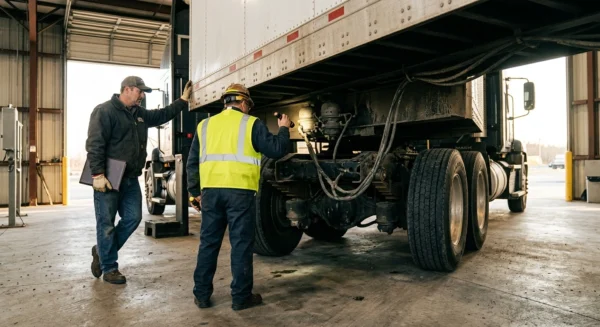
Walk around the rig before shutting down if conditions allow a safe inspection. Confirm that the trailer sits inside the space and that doors and compartments remain secure. Look for tire problems or objects that could interfere with departure.
Secure loose items inside the cab so they cannot roll under the pedals. Keep all exits clear. Carry a charged fire extinguisher and the required warning devices, including three reflective triangles.
Plan your departure while the lot layout remains fresh in your mind. Note pedestrian routes, tight corners, and trucks that may box you in. Identify the safest exit path.
Set an alarm that allows time for a pre-trip inspection and an unhurried exit. Wake up fully before moving. A rushed departure can put mirrors, trailers, and pedestrians at risk.
Protect your rest after parking
A legal space only helps if you can get meaningful rest. When possible, park away from fuel islands, shop entrances, and main driveways. Those areas often stay active throughout the night.
Reefer units are refrigeration engines mounted on temperature-controlled trailers. They cycle on and off, while other trucks may idle where local rules allow. Earplugs, window shades, a sleep mask, and a consistent routine can reduce disruptions.
Lock the doors and keep valuables out of sight. Do not open the door for an unknown person simply because someone knocks. Speak through a closed window or contact facility security if the situation feels wrong.
Check local idling rules and operate approved climate-control equipment correctly. Never use unvented heaters or cooking equipment inside the sleeper. Keep combustible materials away from heat sources.
Wear visible clothing whenever you leave the cab. Walk where drivers can see you, and avoid passing between closely parked trucks. Use extra care around running engines and illuminated brake lights.
Protect your sleep instead of watching the parking lot fill. Drivers with heavy snoring, sleep problems, or daytime drowsiness should consult a doctor and medical examiner. Never conceal symptoms that could affect safe driving.
Adjust parking plans for weather and special loads
Bad weather often fills parking areas earlier because more drivers shut down. It also makes marginal lots harder to enter and leave. Check forecasts and state transportation websites before starting the trip.
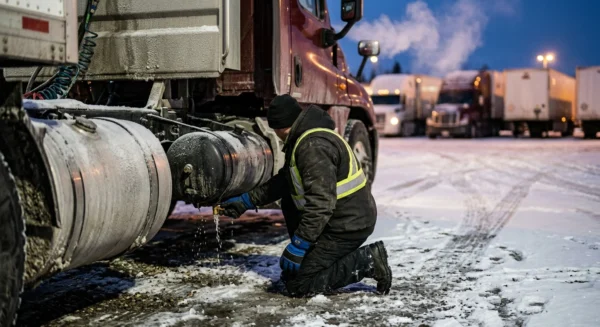
Move your planned stop earlier when forecasts call for snow, ice, high winds, flooding, or severe storms. Avoid areas exposed to rising water, falling branches, poor drainage, or drifting snow. A low gravel lot can become a mud trap overnight.
During winter, avoid stops that require steep untreated climbs or tight downhill exits. Chain laws and commercial vehicle restrictions vary by state and season. Check current state requirements instead of relying on last year’s information.
Hazardous materials, oversize loads, livestock, and high-value freight may involve extra parking or security rules. Follow regulations, permit conditions, customer instructions, and carrier policies. Do not let convenience override a load-specific requirement.
Flatbed drivers need enough room to inspect securement without standing in traffic. Refrigerated drivers should maintain enough fuel for the reefer. They must also keep access to the refrigeration unit clear.
Use the safer location when weather or cargo changes the plan. It may cost more or add miles. Those costs remain lower than recovering a truck from a flooded lot or frozen ditch.
Build a reliable truck parking notebook
Keep notes about legal, dependable stops along your regular routes. Record useful facts instead of general complaints. Include entry directions, typical congestion, legal overflow areas, lighting, restrooms, and difficult turns.
Note whether each location accommodates your trailer length and configuration. Do not save unofficial pull-offs or areas where property owners merely tolerate trucks. Build the list around established facilities and confirmed customer locations.
Review older notes because ownership, construction, access roads, and parking policies change. A location that worked last year may now have barriers or time limits. Always compare your notes with current signs.
Share accurate updates without promising that a space will remain open. Report what you observed and when you observed it. Conditions can change before another driver arrives.
Company drivers can report chronic parking problems to dispatch. That information helps planners build realistic schedules and stopping options. Owner-operators can use the same history to price routes and choose appointment times.
Over time, a parking notebook can save fuel, driving time, and stress. It also prevents repeated mistakes on difficult routes. Update it after each useful stop.
Make a safe stop part of every trip plan
Good parking decisions usually happen before the turn signal comes on. Choose a legal primary stop, maintain two backups, and preserve time to reach them. Update the plan whenever delays change your day.
Reliable truck parking tips focus on preparation rather than shortcuts. Use apps and calls only while stopped, enter crowded lots slowly, and get out to look before backing. If a lot fills, move to a legal alternative instead of joining trucks on a shoulder or ramp.
The safest space may cost money, require extra miles, or force an earlier shutdown. Those inconveniences cost less than damaged equipment, a citation, or a tow. A legal stop that protects your rest and equipment counts as a successful stop.