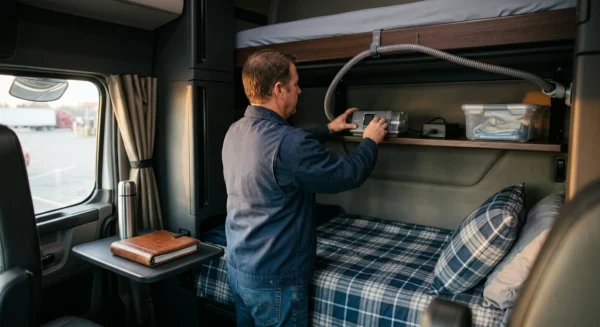
The best truck driver mattress fits the bunk exactly, supports your sleeping position, and manages heat in a tight sleeper. Measure the platform before buying because “truck mattress” does not describe one universal size.
A mattress works hard in a semi. It faces constant vibration, temperature swings, limited ventilation, and nightly use after long shifts. An expensive mattress offers little value if it blocks a cabinet or cannot fit through the sleeper opening.
Likewise, a soft topper cannot repair a worn mattress with a permanent crater. Your practical options include foam, hybrid, latex, adjustable air, and a topper over a sound base. Each option has tradeoffs involving weight, heat, durability, movement, and cost.
Good sleep also depends on cab temperature, light, noise, and your schedule. Aim for fewer pressure points, less tossing, and a bunk that works without forcing you to rearrange the truck.
How to Choose the Best Truck Driver Mattress
Start with fit. Then compare support, temperature control, weight, and installation requirements. Remove the old mattress and measure the bunk’s length, width, and available height.
Check every corner because sleeper platforms may not be square. Also measure the narrowest door, aisle, turn, or cabinet opening along the installation path.
Your sleeping position matters more than the firmness label on a product page. Side sleepers often need extra pressure relief around the shoulders and hips. Back and stomach sleepers usually need stronger support through the midsection.
Heavier sleepers may prefer denser foam or a more supportive construction. However, manufacturers use different firmness scales, so compare materials, specifications, and return terms instead of relying on labels alone.
Consider the truck before ordering. A tall mattress may interfere with an upper bunk, cabinet, restraint, window, or storage lid. A heavy model can also make under-bunk storage difficult to reach.
If you slip-seat or expect to change trucks, a portable topper may make more sense than a custom replacement. Check the seller’s return policy and warranty requirements before buying. Some companies will not accept a compressed mattress after it expands.
Do not assume an RV mattress will fit because the seller advertises it for mobile use. Get the actual dimensions in writing and compare them with your measurements.
Truck Mattress Options by Use Case
No single construction works for every driver, truck, and climate. Foam provides motion isolation and simple construction. Hybrids add springs for a feel closer to a household bed.
Latex feels responsive and often resists deep sagging, but it can be heavy. Adjustable air allows firmness changes while adding pumps, hoses, and air chambers. A topper causes the least disruption, but it needs a flat and supportive mattress underneath.
| Mattress type | Best use case | Main advantages | Main drawbacks |
|---|---|---|---|
| All-foam replacement | Drivers seeking pressure relief and low motion transfer | Quiet, flexible during installation, and available in several firmness levels | May retain heat, can soften over time, and varies widely in quality |
| Hybrid | Drivers who prefer a residential mattress feel | Supportive, responsive, and often easier to move around on | Heavier, harder to bend, and sometimes too tall for truck bunks |
| Latex foam | Drivers who dislike the slow sink of memory foam | Responsive, supportive, and easier to turn on | Heavy, difficult to maneuver, and unsuitable for people with relevant material allergies |
| Adjustable air | Drivers who want to change firmness | Allows firmness adjustments without replacing the mattress | Adds noise, power needs, and potential failure points |
| Foam or latex topper | Improving a mattress that remains flat and supportive | Portable, simple to install, and easy to move between trucks | Reduces headroom and cannot repair a sagging or damaged mattress |
All-Foam Mattresses for Pressure Relief
An all-foam mattress has no springs, hoses, pump, or other moving parts. Memory foam usually contours closely around the body. Conventional polyurethane foam tends to feel more responsive and less enveloping.
Layered models may pair a softer comfort layer with firmer support foam. In a truck, foam can often bend enough to pass through a narrow sleeper opening. It also limits motion when wind rocks the tractor or nearby equipment shakes the cab.
Heat remains the main drawback. Dense, contouring foam can feel warm in a humid sleeper or on a platform with little airflow.
Do not judge foam only by its initial softness. Your hips should not sink until your lower back bows. When you sleep on your side, the mattress should also give your shoulder enough room.
Follow the manufacturer’s instructions when opening a compressed mattress. Give it the recommended time and ventilation before sleeping on it.
Hybrid Mattresses for a Familiar Bed Feel
A hybrid combines foam comfort layers with a spring support system. It often feels closer to a household mattress than solid foam. Its responsive surface can also help drivers who change positions frequently.
Size and weight create the main problems. A hybrid may not bend around the passenger seat, through a side door, or past cabinets. Thick models can also reduce clearance above the bunk.
Measure the entire installation path, not only the platform. Springs may transfer more movement than solid foam, although construction affects the result.
Check whether the edge feels stable enough for sitting while you put on boots. Still, do not use the mattress edge as a step. A hybrid makes sense when the sleeper has enough headroom and you plan to keep the truck for a while.
Latex Mattresses for Responsive Support
Latex suits drivers who want cushioning without the slow sink of some memory foam. It responds quickly when you roll over, which makes movement easier. Depending on the cover and construction, it may also feel less warm than deeply conforming foam.
No mattress material stays cool in a poorly ventilated sleeper. Cab temperature, bedding, humidity, and platform airflow still matter.
Weight creates the biggest drawback. One person may struggle to carry, bend, or lift a full latex mattress. That weight also complicates access to under-bunk storage.
A thin latex comfort layer or topper may be easier to manage. Before ordering, confirm the material, dimensions, total weight, and care instructions.
Anyone with a known latex allergy should discuss exposure concerns with a medical professional. If you change trucks often, think carefully before installing a heavy latex mattress.
Adjustable Air Mattresses for Variable Firmness
An adjustable air mattress works for drivers whose comfort needs change. It may also suit team drivers with different preferences on separate bunks. Adding or removing air changes the feel without adding more foam.
That flexibility requires extra equipment. The system may include a pump, hoses, electrical connections, and air chambers that can leak or fail.
Temperature changes can affect the chamber’s feel. A setting that works during a warm afternoon may feel different after a cold night.
Connect the pump according to the manufacturer’s instructions and the truck’s electrical capacity. Keep cords away from pinch points, damage, and exits.
Before buying, check what happens if the pump fails on the road. Replaceable parts and clear troubleshooting instructions make repairs easier. Choose adjustable air only if tunable firmness outweighs the added equipment and maintenance.
Toppers for a Sound but Uncomfortable Bunk
A topper makes sense when the existing mattress remains flat, clean, firm, and structurally intact. Foam adds contouring, while latex adds more responsive cushioning. Fiber-filled pads mainly soften the surface and provide little extra support.
Thicker toppers change the bed’s feel more dramatically. They also reduce headroom and may interfere with nearby fixtures.
A topper cannot fix sagging, damaged edges, musty odors, or broken internal parts. Put soft foam over a crater and you still have a crater wearing a hat. Replace the base mattress when the underlying structure has failed.
Secure the topper with a fitted cover or deep-pocket sheet. This prevents bunching and keeps it from sliding toward the aisle.
Slip-seat drivers should choose a topper they can roll, carry, and store safely. Use it only when the assigned mattress remains sanitary and supportive.
Getting Firmness and Support Right
Firmness describes how hard the surface feels. Support describes how well the mattress keeps your body aligned. A firm mattress can still provide poor support if the middle collapses.
A softer surface can support you correctly when it sits over a strong base layer. For that reason, a firmness number alone tells you very little.
Side sleepers need enough give around the shoulder and hip. Otherwise, those areas carry too much pressure. Back sleepers usually need support that keeps the pelvis from dropping far below the rib cage.
Stomach sleepers often benefit from less sink around the midsection. Personal comfort, body size, and medical needs still affect the right choice.
Pay attention to what wakes you instead of chasing a label. Tingling arms may signal excess shoulder pressure. Lower-back stiffness can result from too much sink, too little cushioning, sleeping position, or a medical problem.
Discuss persistent pain, numbness, breathing trouble, or sleep problems with your doctor and DOT medical examiner. An online mattress quiz cannot diagnose those symptoms.
Measure the Sleeper Before Buying
Remove the old mattress when practical and measure the actual support surface at several points. Record the length, width, maximum thickness, and any unusual corner shapes.
Note hinges, storage lids, restraints, vents, windows, and cabinet doors. Do not rely on the truck’s model name because sleeper layouts and previous modifications vary.
- Measure the platform: Check the width at the front, middle, and rear. Measure the length along both sides.
- Check vertical clearance: Leave room for upper bunks, cabinets, windows, and comfortable movement.
- Map the installation path: Measure doors, turns, seats, and narrow gaps leading to the bunk.
- Check storage access: Confirm that you can still lift the platform or reach compartments safely.
- Confirm bedding fit: Match sheets and the mattress protector to the finished dimensions.
Inspect the area under the old mattress. The platform should feel solid and remain clean and dry. Remove or repair protruding fasteners and sharp edges that could cut the new cover.
Trace and repair any water staining or dampness before installing a new mattress. Otherwise, trapped moisture may damage the mattress and encourage mold growth.
Ask for help with a heavy or awkward mattress. Do not risk a back injury while lifting alone in a parking lot.
Keep three points of contact when entering or leaving the cab. Never balance a mattress on the steps while standing below it. After installation, confirm that the mattress does not block an exit, restraint, control, or access panel.
Managing Heat, Moisture, and Ventilation
A comfortable mattress can still perform poorly if it traps heat and moisture. Foam on a solid platform receives little airflow from below. Meanwhile, breathing, sweat, wet clothing, and temperature changes add moisture to the sleeper.
Inspect beneath the mattress regularly, especially after humid weather or large temperature swings. A breathable protector helps manage sweat and spills. However, some waterproof protectors sleep warmer than others.
Wash bedding often enough to control odors and body oils. Dry every item fully before returning it to the bunk. Never store damp sheets or wet work clothes under the mattress.
Operate the truck’s climate system according to the manufacturer’s instructions and carrier policies. Avoid improvised heaters, damaged cords, and equipment that creates fire or carbon monoxide hazards.
If condensation keeps returning, inspect the sleeper for leaks. Ask the shop to check the seals, ventilation, and climate-control system.
Installing a Mattress Without Creating a Cab Hazard
Clear the sleeper before moving the mattress inside. Secure mugs, tools, canned food, and electronics so they cannot roll toward the pedals. Keep the aisle open and protect cables from crushing or abrasion.
Do not trim a mattress unless the manufacturer specifically designed it for cutting. Cutting may expose foam, damage fire barriers, ruin the cover, and void the warranty. It can also leave loose material inside the cab.
Exchange a mattress that does not fit. You can also order a custom model made to the correct dimensions.
Keep required emergency equipment accessible, including the fire extinguisher and three reflective warning triangles. Do not bury these items behind bedding or beneath a platform that has become difficult to lift.
Check both cab and sleeper exits after adding the mattress, topper, pillows, and storage bins. Nothing should obstruct a safe exit.
Protecting and Maintaining the Mattress
Use a removable mattress protector. Road life exposes bedding to sweat, dust, food, spills, and fuel odors. A protector takes less effort to wash than a mattress and reduces wear on the cover.
Choose a snug fit so the protector cannot twist or bunch underneath you. Wash it according to the care label and dry it completely.
Rotate the mattress if the manufacturer allows rotation. This helps when you sleep in the same position every night. Do not flip a one-sided mattress unless the instructions identify it as reversible.
Vacuum the mattress surface and bunk platform periodically. Inspect the seams, underside, and nearby walls for pests, moisture, or damage.
Replace the mattress when sagging, damaged foam, broken components, persistent odors, or lost support disrupt your sleep. No universal replacement schedule fits every driver. Construction, body weight, use, and cab conditions all affect mattress life.
Judge the mattress by its condition and comfort, not by a replacement date from an advertisement.
Sleep Problems a Mattress Cannot Fix
A better bunk can reduce pressure and discomfort. It cannot create more sleep time or treat a medical condition.
Darken the cab and control noise where practical. Set the navigation, radio, podcasts, and temperature before settling in. FMCSA rules prohibit CMV drivers from texting or holding a mobile phone while driving.
Loud snoring, gasping, morning headaches, and severe daytime sleepiness may indicate sleep apnea or another health problem. Do not ignore or hide these symptoms.
Medical examiners may require evaluation and treatment. Drivers with treated sleep apnea may qualify for certification. Carriers and examiners may also review CPAP compliance data when applicable.
Talk with your doctor and medical examiner if pain or poor sleep affects alertness. Never use a new mattress as a reason to drive through dangerous fatigue. The bunk supports sleep, but it cannot replace it.
Choose the Best Truck Driver Mattress for Your Cab
For many drivers, the best truck driver mattress is a correctly sized foam or hybrid model. Choose it according to sleeping position, heat tolerance, available headroom, and installation access.
A topper makes more sense when the existing mattress remains flat and supportive. Adjustable air and latex address more specific comfort preferences, but both add weight or equipment.
Measure twice and check the full installation path before spending money. Read the return policy, especially for compressed mattresses. Favor practical support over fancy layer names because no premium material can overcome a poor fit.
Keep the bunk dry, wash the bedding, secure loose gear, and leave emergency equipment accessible. If you continue waking sore, numb, overheated, or exhausted, reassess the mattress. Speak with a medical professional when symptoms persist.
A good sleeper mattress should do its job quietly every night. No circus tricks required.