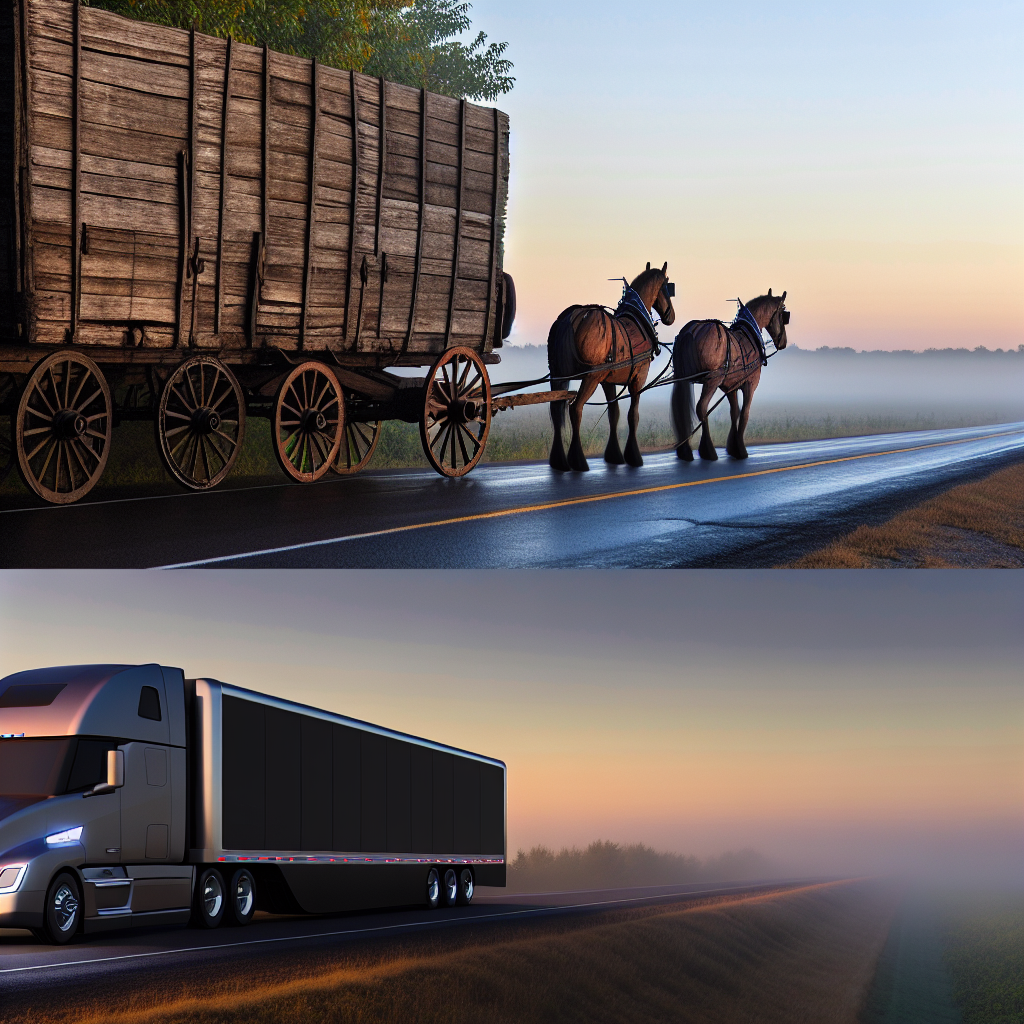
The evolution of trucking is a story every driver lives out—whether you’re hauling reefers across county lines or pulling dry vans across the nation. It’s more than a timeline; it’s a legacy shaped by grit, innovation, and resilience. From wooden wagons wading through muddy trails to today’s GPS-powered autonomous trucks rolling down I-40, this century-old journey reveals how freight hauling became as efficient and reliable as it is today. Understanding the evolution of trucking helps drivers navigate current technology, regulations, and what lies ahead on America’s highways.
The Horse-Drawn Freight Era: Where Trucking Began
Before diesel engines and interstate systems, freight moved on wooden wheels drawn by horses and mules. In the 1800s, Civil War veterans and early entrepreneurs drove Conestoga wagons packed with lumber, grain, and tools. These early haulers ventured between commercial centers like St. Louis, Chicago, and frontier markets. They braved rugged terrain, unpredictable weather, and the physical toll of weeks-long hauls.
Despite the hardships, dependability mattered most. A freight hauler’s reputation often meant the difference between getting repeat business or losing routes. Wagon freight played a critical role in “last-mile” delivery after rail stops—an early glimpse at the hub-and-spoke structure used in modern trucking logistics.
The introduction of internal combustion engines brought new momentum, reshaping freight’s future with mechanical power over muscle.
The Rise of Gasoline and Diesel Power: Trucking Takes Shape
The early 1900s ushered in the first gasoline-powered trucks, marking a leap in the evolution of trucking. Essentially motorized wagons, these vehicles featured sparse cabins, solid rubber tires, and low-speed capabilities. During World War I, companies like Mack proved trucking’s potential by supplying military freight under demanding conditions.
Despite the mechanical limitations, infrastructure investment quickly followed. The Federal Aid Highway Act of 1921 improved basic roadways. Route 66, commissioned in 1926, soon became vital for trade, connecting rural suppliers and city buyers. By the 1930s, diesel engines added fuel efficiency and power, allowing companies like Freightliner to build rugged tractors optimized for national distribution networks.
As equipment progressed, so did the demands on truckers, leading to the transformation of the profession from frontier hauling to regulated, long-haul freight transport.
Early Trucking Regulations: Building Safer, Standardized Roads
With growth came challenges: overloaded rigs, inconsistent safety standards, and cargo theft. In response, the Motor Carrier Act of 1935 brought regulation through the Interstate Commerce Commission (ICC). It required freight companies to follow strict rate structures and licensing, putting trucking on par with the rail industry.
By the 1960s, the Department of Transportation introduced unified federal safety standards. This included Hours of Service (HOS) regulations to combat fatigue, creating safer roads. CB radios became essential tools, helping truckers share updates on weather, fuel prices, detours, and “bear traps.”
Independent truckers and small fleets found steady ground during this era. The open roads, big chrome trucks like the Kenworth W900A, and personalized dispatch routes fostered a sense of freedom. Truck stops like TA and Pilot found their place along routes such as I-70 and I-20, offering rest, fuel, and camaraderie.
Deregulation and the Push for Freight Efficiency
The 1980 Motor Carrier Act dramatically changed the evolution of trucking. By deregulating freight pricing, it created more competition among carriers and expanded the market for independent operators. Major fleets like JB Hunt and Schneider quickly grew by optimizing routes and leveraging economies of scale.
However, deregulation brought its share of pressures. Drivers encountered tighter dispatch schedules, cost-cutting measures, and increased rule enforcement. Early onboard recorders began tracking driver logs—precursors to today’s ELD mandates—and the emphasis on compliance intensified.
Truckers adjusted with strategy. Fuel stops factored in price comparisons on corridors like I-95 and I-10. Parking before cutoff times became routine. Owner-operators used leaner budgets to maintain trucks, from tire pressure checks to reefer monitoring. In the race for efficiency, experience and planning became as valuable as horsepower under the hood.
Technology and Automation: Trucking in the Digital Age
Digitization marks the latest phase in the evolution of trucking. Advanced systems now guide rigs that resemble smart machines more than mechanical tools. With collision mitigation, GPS navigation, automatic transmissions, and advanced braking, today’s trucks are safer and more efficient—ideal for both veteran and new drivers.
Digital load boards and mobile apps like Trucker Path or DAT streamline booking, routing, and fuel planning. ELDs ensure easier compliance with HOS limits. Fuel-saving tools pinpoint the cheapest diesel along routes like I-35 across the Midwest. These innovations help drivers cover more ground with tighter margins and fewer surprises.
Autonomous trucking is around the bend. Companies like TuSimple and Embark are testing driverless rigs along designated corridors such as I-10 through Arizona. Lidar, radar, and artificial intelligence work in sync, aiming to reduce accidents and address the nationwide driver shortage. Yet human drivers remain essential for last-mile deliveries, specialized freight, and hands-on tasks like load management and docking.
What the Evolution of Trucking Means for Today’s Drivers
The evolution of trucking isn’t just a history lesson—it’s a daily reality for every driver. It affects how freight is scheduled, which technologies drivers use, and how regulations shape each journey. Whether you cruise in a modern Cascadia or run an older Peterbilt, you’re riding in the legacy of truckers past and future.
New drivers should learn from seasoned pros—navigating weigh stations, mastering manual shifts, or choosing safe rest stops. Owner-operators must monitor emissions rules in states like California, prepare for zero-idling zones, and invest in APUs when needed. Staying current on routing software, fuel cost optimization, and freight management tools is no longer optional—it’s essential.
Regardless of how advanced trucks become, the role of the driver remains vital. It takes experience, stamina, and pride to run a rig safely and efficiently. The evolution of trucking continues to unfold, and today’s drivers are writing its next chapter—one mile and one delivery at a time.