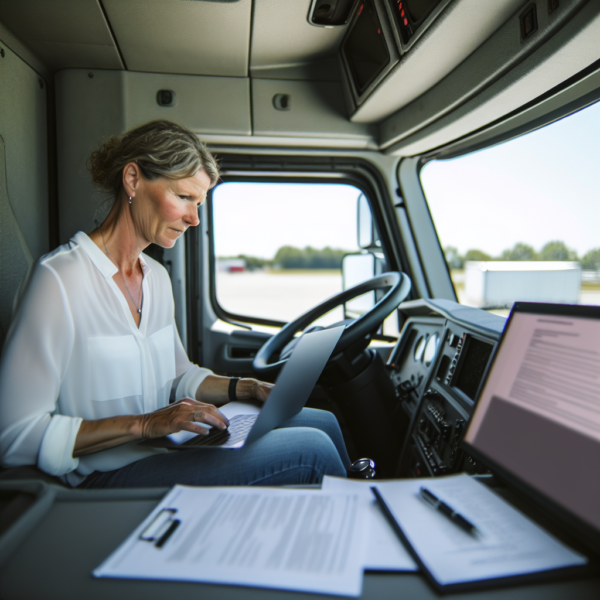
Being an Owner Operator in Trucking is one of the most rewarding yet demanding decisions a professional driver can make. This career move shifts you from the company driver seat to the realm of entrepreneurship — where you’re not just driving your rig, but also running a full-fledged business. As an owner-operator, you wear multiple hats: driver, dispatcher, accountant, and risk assessor. For those who embrace the challenge, the independence and earning potential are significant. But with every mile comes choices that impact your income, time, and safety. Whether leasing onto a carrier or running under your own authority, mastering the logistics of ownership is key to long-term success.
Choosing the Right Equipment: Your Truck Is Your Business
Selecting the right truck is the foundation of being an owner operator in trucking. Your truck is more than transportation — it’s your income generator. Start by identifying the freight you plan to haul and the regions you’ll operate in. A used 2016 Freightliner Cascadia with a Detroit DD15 engine is a fuel-efficient choice for long-haul dry van work due to the availability of parts and reliable performance.
If you’re tackling heavy haul or mountainous flatbed routes, prioritize features like stronger suspension, enhanced transmissions, and a 13- or 18-speed Eaton Fuller manual transmission. Consider fuel economy by choosing an axle ratio between 2.64 and 3.08 for highway driving. Install auxiliary power units (APUs) to cut down on fuel use during idle time and boost your bottom line.
Be proactive with maintenance. Factor in warranty options, the cost of in-frame rebuilds, and the reliability of components like DEF systems on post-2010 emission trucks. Skimping early can lead to painful expenses later.
Running Smart: Fuel Strategy, Routing, and Load Planning
Fuel remains the single largest operating cost in trucking. Smart owner-operators use apps like Trucker Path, Mudflap, or NASTC fuel cards to save up to $0.25 per gallon. On a 250-gallon weekly fill-up, that adds up fast. Optimize your routing to pass through low-fuel-cost states such as Missouri or Oklahoma, and steer clear of high-tax states like Pennsylvania when possible — especially if you’re calculating quarterly through IFTA.
Load strategy matters. Target loads with high revenue per mile and minimal deadhead. Connect short regional loads via freight boards like DAT and Truckstop.com. Consider lane trends and seasonality — for example, plan strong outbound rates into low-return areas like Florida or the Northwest during winter. Keeping detailed notes by lane and season helps maximize profitability without relying on a dispatcher.
Understanding Expenses: Managing Fixed and Variable Costs
Success in being an owner operator in trucking hinges on knowing your cost per mile. Break expenses into fixed and variable categories. Fixed costs, including truck payments, insurance, and permits, are consistent monthly bills. Variable costs like fuel, tires, and roadside repairs can fluctuate drastically. For example, running 10,000 miles monthly with $4,000 in fixed costs equals $0.40 per mile. Add $0.60 for fuel and $0.12 for maintenance, and you’re over $1.20 per mile in operating costs.
Don’t ignore downtime as a cost. A breakdown in remote areas like I-80 in Wyoming can leave you sidelined for days. Minimize losses by carrying essentials like belts and fuses, doing minor repairs yourself, and building relationships with reputable shops — for instance, Freightliner of St. Louis or TA Ontario, CA — known for fast parts and turnaround times.
Compliance, Safety, and Staying Legal
DOT compliance is a non-negotiable part of being an owner operator in trucking. Whether you’re leased to a carrier or hold your own MC authority, staying up-to-date on safety rules, electronic logging device (ELD) use, and hours-of-service compliance is crucial. Operating under your own authority requires a DOT number, MC number, BOC-3 filing, IFTA decals, UCR registration, and IRP plates.
CSA scores matter. Frequent roadside inspections on major corridors like I-70 or I-40 can harm your reputation and profitability. Consistently perform full pre-trip inspections: brakes, lights, tire tread, and medical card validity. Avoid expired paperwork or equipment violations, especially in tough enforcement states like Texas and Indiana.
Comfort, Safety, and Sustainable Living on the Road
As your mobile home, your truck should support a comfortable lifestyle. Invest in memory foam mattresses, blackout curtains, and GPS units like the Garmin Dezl line. Install inverters to power essential electronics. Maintain your health with portable workout gear and stick to cleaner food options available at stops like Pilot and Love’s.
Safety is always top priority. Map overnight stops using Trucker Path, and choose well-known truck stops — like the TA at Exit 5 on I-75 in Georgia — for secure overnight parking. Avoid unfamiliar urban stops after dark in high-risk cities like Chicago or Memphis. Equip your cab with a reliable dash cam such as Garmin or Samsara to protect yourself legally in case of accidents or disputes over freight claims.
Leased-On vs. Operating Under Your Own Authority
Starting out as an owner operator in trucking often means choosing between leasing onto a carrier or running independently. Leasing simplifies compliance and grants access to freight and group insurance — but it comes at a cost. You’ll typically earn 65–75% of line haul revenue and may face routing restrictions or dispatch obligations.
Running under your own authority provides complete freedom over your schedule, load choices, and customer relationships. However, it demands administrative expertise: invoicing, collections, insurance management, and continued FMCSA compliance. Those who master these skills can build broker relationships, negotiate stronger rates, and net over $2.00 per mile, even in slower markets.
Growing Your Business: Long-Term Owner-Operator Strategies
Being an owner operator in trucking evolves from driving to business-building. To stay profitable long-term, follow a preventive maintenance schedule, plan loads strategically, and keep accurate financial records. Work with industry-specific accountants such as ATBS or The Tax Relief Company to maximize deductions including per diem, depreciation, and mileage expenses.
Expanding your fleet requires planning. Adding a second truck and hiring a driver increases revenue but raises your risk. Create clear hiring criteria, implement a robust safety management plan, and maintain emergency cash reserves. Build credit with lenders like Mission Financial or Commercial Fleet Financing to prepare for growth responsibly.
Ultimately, being an owner operator in trucking is about more than independence — it’s about sustaining a profitable, scalable business. From equipment selection to compliance mastery and smart routing, every decision matters. With discipline, strategic planning, and the right mindset, the lifestyle of ownership doesn’t just drive income — it drives opportunity for the long haul.